If you had to describe Easy Anti-Cheat (EAC) in simple terms, it’s not just a basic file checker - it’s a full security system that monitors client integrity, suspicious processes, and any attempts to interfere with the game. Facepunch regularly reminds players that EAC bans in Rust are permanent, and if a ban wave ever turns out to be incorrect, those bans are lifted automatically without manual support intervention. That’s an important detail because it breaks the common myth that submitting a ticket will quickly get you unbanned. In reality, that almost never works, although rare exceptions do exist.
What Easy Anti-Cheat Is and How It Sees Your PC
Easy Anti-Cheat operates much deeper than most players think. It’s not just checking whether you have a program named “cheat.exe” on your desktop. The system monitors the game environment, reacts to client manipulation, evaluates suspicious processes, and tries to determine whether you’re gaining any unfair advantage.
Because of this, many players assume bans only happen for obvious things like aimbot or wallhack, but in reality the list of triggers is much broader. If a program injects itself into the game process, modifies client behavior, emulates input, alters device signals, or tries to hide its presence, the anti-cheat can flag it as a threat. Facepunch has mentioned that in rare cases EAC can conflict with system software and prevent Rust from launching, but that’s about technical issues - not a situation where a completely clean player logs in and suddenly gets banned out of nowhere.
Types of Bans in Rust: Permanent, Temporary, VAC vs EAC
Players often mix everything together, but Rust has several different types of bans. An EAC ban is issued specifically by Easy Anti-Cheat, and these bans are permanent with no real chance of reversal. Even if you create a new account, the ban can carry over - it’s only a matter of time.
Another important detail is that EAC bans can be delayed. The system might detect software today, but the ban could be applied later. This is why many players think they were banned “for no reason” after they already removed everything.
VAC, on the other hand, is Steam’s anti-cheat and is mostly relevant for games like CS or Dota. It doesn’t really play a major role in Rust.
There are also server bans from admins and manual bans issued by Facepunch for specific violations, including playing with cheaters. But if you see “EAC banned” on your screen, that’s the worst-case scenario - a permanent ban that won’t be lifted no matter how much you try to appeal it.
Prohibited Software
Wallhack, ESP, aimbot, radar, recoil scripts, external overlays with unfair advantages, DLL injectors, private loaders - all of these fall into the exact category EAC is designed to detect and punish. Even if you only launched a cheat for a few minutes on a secondary account just to “check it out,” it doesn’t matter. From the system’s perspective, the only thing that matters is that interference was detected.
Injectors are especially risky. Many players believe that if a tool isn’t technically a cheat, it’s safe to use. In reality, the method itself - injecting into the game process or modifying memory - is already suspicious enough to trigger a ban. Any software that hooks into Rust, alters client behavior, or loads external modules is essentially asking for trouble.
Macros, Bloody/A4Tech Mice, and Recoil Scripts
One of the biggest gray areas in Rust is macros. Players have argued for years whether recoil scripts are cheats or just “quality of life” tools. In reality, anything that automates recoil control, simulates perfect spray patterns, or reduces the need for player skill gives an unfair advantage.
Facepunch took a very clear stance on this years ago by officially banning devices like Bloody and A4Tech. These mice were commonly used with onboard memory to run recoil scripts, and the developers treated that as cheating.
This isn’t some old forum myth - it’s an official policy. If you’re using this kind of hardware along with questionable macro software, the risk is very real. Even if you don’t get banned instantly, you’re putting yourself in a high-risk environment for detection.
Playing with a Cheater (Association Ban)
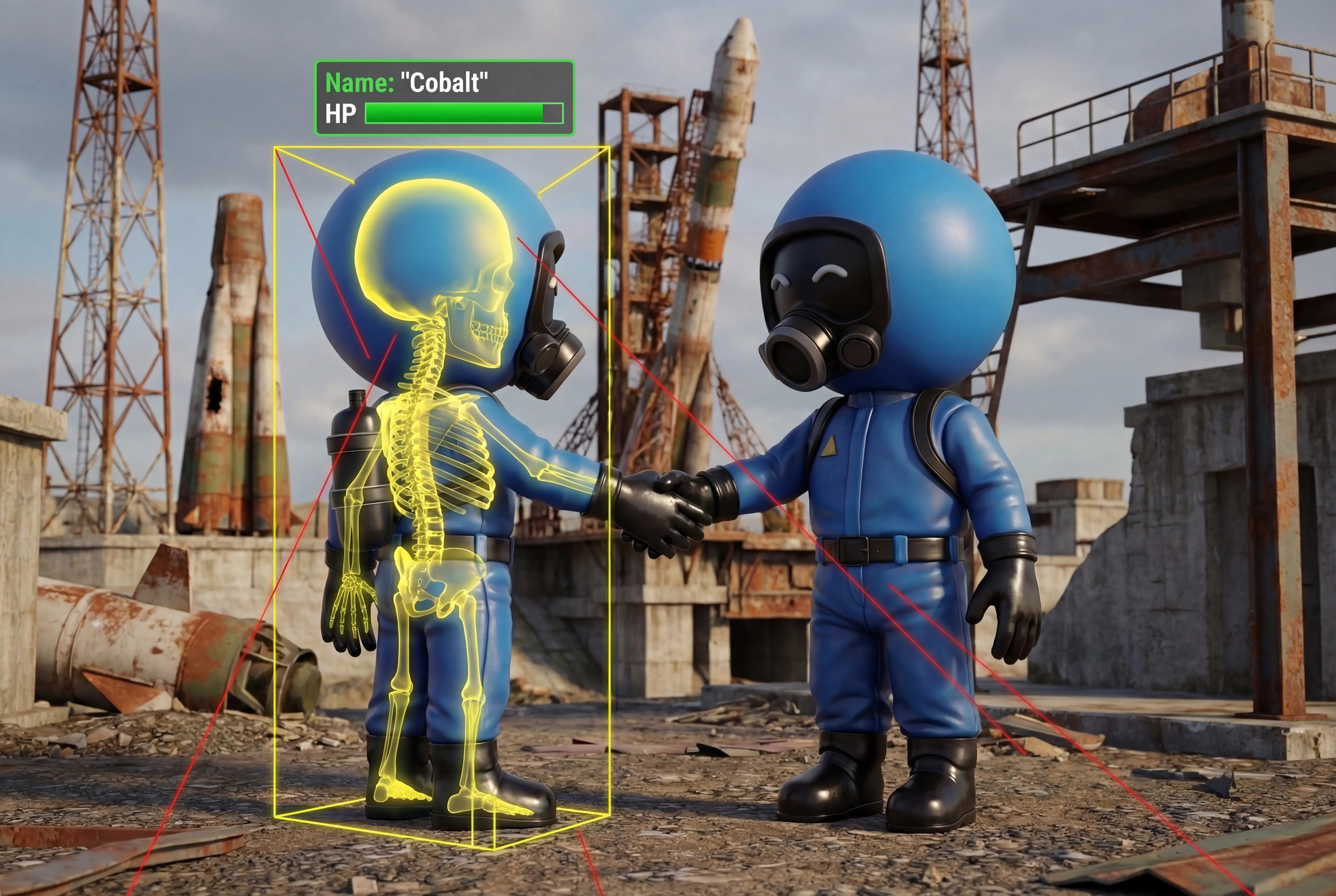
One of the most frustrating scenarios is getting banned without using cheats yourself. This happens through what’s known as an association ban.
These bans are issued manually by Facepunch when a player is repeatedly playing with a cheater and clearly benefiting from it. There’s no appeal for this type of ban.
From a player’s perspective, it can feel unfair - you might not have known someone in your group was cheating. But in practice, if you’ve been consistently teaming with that player, sharing loot, and participating in raids together, the system treats it as intentional cooperation.
There is some nuance here. Playing a couple of wipes with someone might not trigger a permanent ban, but long-term interaction significantly increases the risk.
Spoofers and Ban Evasion
After getting banned, many players turn to spoofers and bypass methods. The idea is simple - change your HWID, clean traces, create a new account, and continue playing.
The reality is much harsher. You might get away with it for a while, but the ban will come again. Sometimes in a few days, sometimes in a few months, but the outcome is almost always the same.
At best, you waste time and money. At worst, you end up stacking bans across multiple accounts and completely ruin any chance of returning to the game legitimately.
Conclusion
The simplest and most effective advice is also the most boring: don’t use cheats, don’t run injectors, don’t mess with spoofers, don’t rely on shady software, and don’t consistently play with cheaters.
Facepunch has a strict stance when it comes to cheating, and if you want to keep playing Rust without issues, there’s really no alternative. Appeals are basically useless if you’ve done any of the things listed above.
Get up to 45% rewards on CobaltLab - jump in and claim yours!