The late stage of a wipe is the moment when simple raids stop being the main form of pressure. Early on, a couple of satchel charges are enough, and in the midgame rockets and C4 decide most outcomes. Closer to the endgame, however, strategic-level systems appear. MLRS, SAM Sites, and HML (Homing Missile Launcher) literally change the rules of warfare on a server. Strikes become long-range, defense turns multi-layered, and air control becomes a separate aspect of gameplay.
Most importantly, these mechanics affect more than just your raids. They determine how safely you store loot, how effectively you counter neighbors, how confidently you defend against minicopters, and whether you can survive a missile strike on your base.
What Is MLRS (Multiple Launch Rocket System)
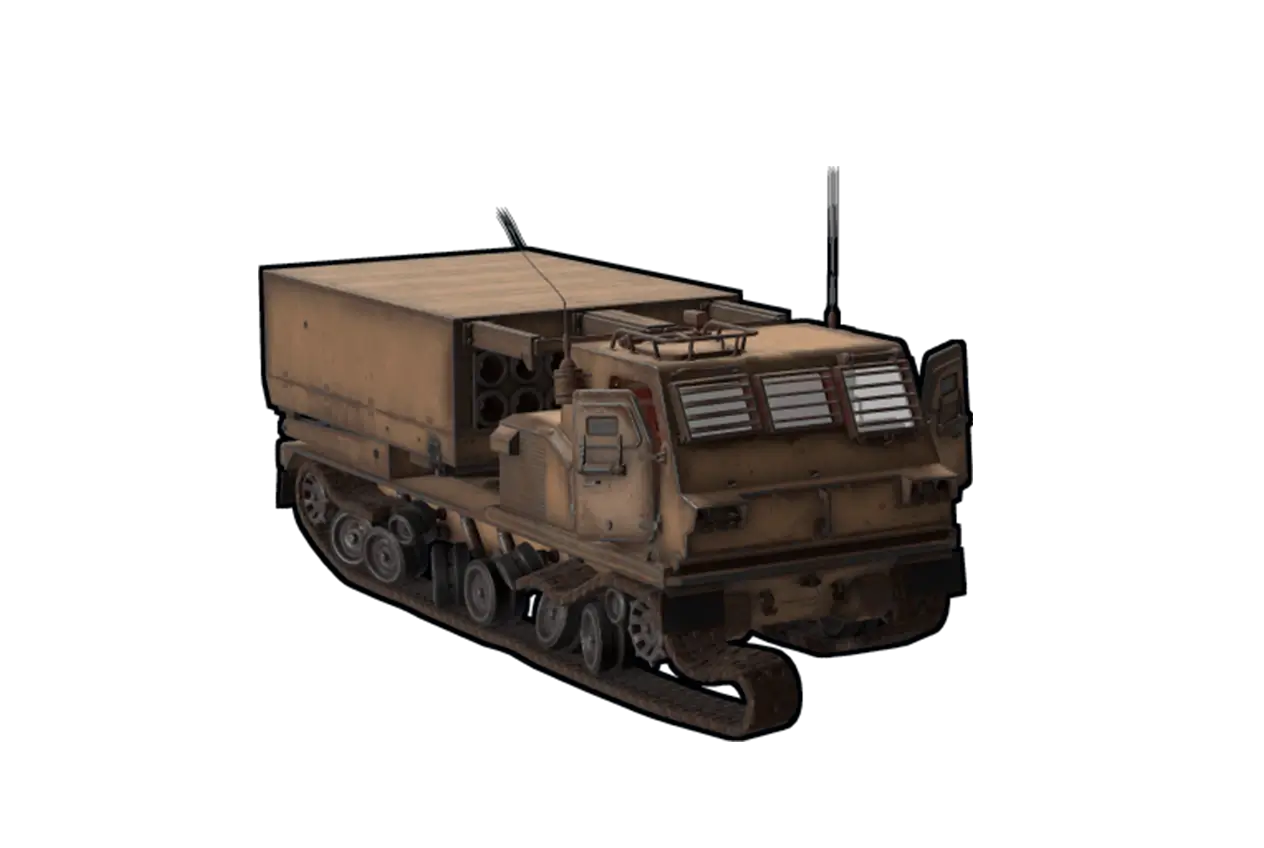
MLRS is a stationary rocket installation that fires a salvo of rockets at a selected point on the map. The key difference compared to a standard rocket launcher is that you do not need direct line of sight. You do not have to approach the base closely, break through gates, or win the first fight at the entrance. You simply choose an area and strike from above.
MLRS works as an area-pressure weapon. The rockets do not land on one perfectly precise spot but instead blanket a sector. This makes MLRS especially effective against roofs, external perimeters, dense base layouts, and bases where key elements are placed close together. If an enemy likes to stack turrets, generators, and critical door paths in one location, MLRS punishes this extremely hard.
At the same time, MLRS is rarely a full replacement for a classic raid. Its strength lies in preparation - breaking the roof, disabling turrets, destroying external defensive elements, exposing weak points, and making the follow-up breach cheaper in sulfur. Ideally, MLRS is the opening strike, followed by rockets and C4.
Where to Find and How to Obtain MLRS
The MLRS installation itself is a map object. It cannot be crafted or moved. This means you cannot bring MLRS to your base and place it wherever you want. You must work with what exists on the map and factor in the risks.
The most valuable resource is MLRS rockets. They cannot be crafted at a workbench and are not farmed consistently like regular rockets. They are obtained from late-game activities such as locked military crates, high-tier RTs, and events like Cargo Ship and Oil Rigs. Because of this, MLRS rockets often become an internal clan currency and a highly contested resource.
If you want to use MLRS regularly, you need more than just a couple of rockets. You must build efficient farming routes through strong RTs, control key zones, win large counter-raids, and maintain secure storage. Otherwise, you will spend weeks collecting an MLRS stockpile only to waste it on a single poorly planned strike.
MLRS Usage Mechanics
MLRS mechanics are simple in steps but complex in execution. You mark a point on the map, load the rockets, launch the salvo, and after a short delay, a series of impacts hits the area. This delay matters - the target may have time to react if the base is online. Because of this, MLRS is most often used against offline bases or as part of sustained pressure when defenders are already occupied and cannot properly evacuate loot.
The key nuance is target value. If you strike a random section of a base, you may destroy useless walls and gain nothing. If you understand the layout and can predict where the roof, turrets, generators, and loot rooms are located, the raid becomes far more effective.
In other words, you scout the base in advance using binoculars, elevation, minicopter flyovers, and analysis of likely weak points. Only then do you select the strike sector. Sometimes it is better to hit the edge of a base rather than the center, disabling a specific defensive cluster and opening a safer entry point.
Cost and Effectiveness of MLRS Rockets
From player experience, MLRS is expensive but impactful - and that is almost always true. MLRS rockets are valuable not only because of their damage, but also because of their psychological effect. When a base is hit by a salvo, defenders lose control, move chaotically, extinguish fires, rebuild, open doors, and often make mistakes they would never make during a standard raid.
In terms of efficiency, MLRS is most effective in three scenarios:
First - breaking the roof and destroying turrets before the main raid begins. This reduces rocket usage later and increases the chance of success because the roof stops being a dominant position.
Second - destroying the external perimeter, including external walls, towers, and generator zones. This removes the defender’s ability to safely counter and respawn around the base.
Third - finishing off an already breached base. Sometimes after a classic raid, players seal the hole and hide loot. A follow-up MLRS salvo can break the structure again and completely collapse the defense.
At the same time, MLRS is almost never worth using against small bases purely for potential loot. In those cases, the cost of the strike often exceeds the possible reward.
What Is a SAM Site
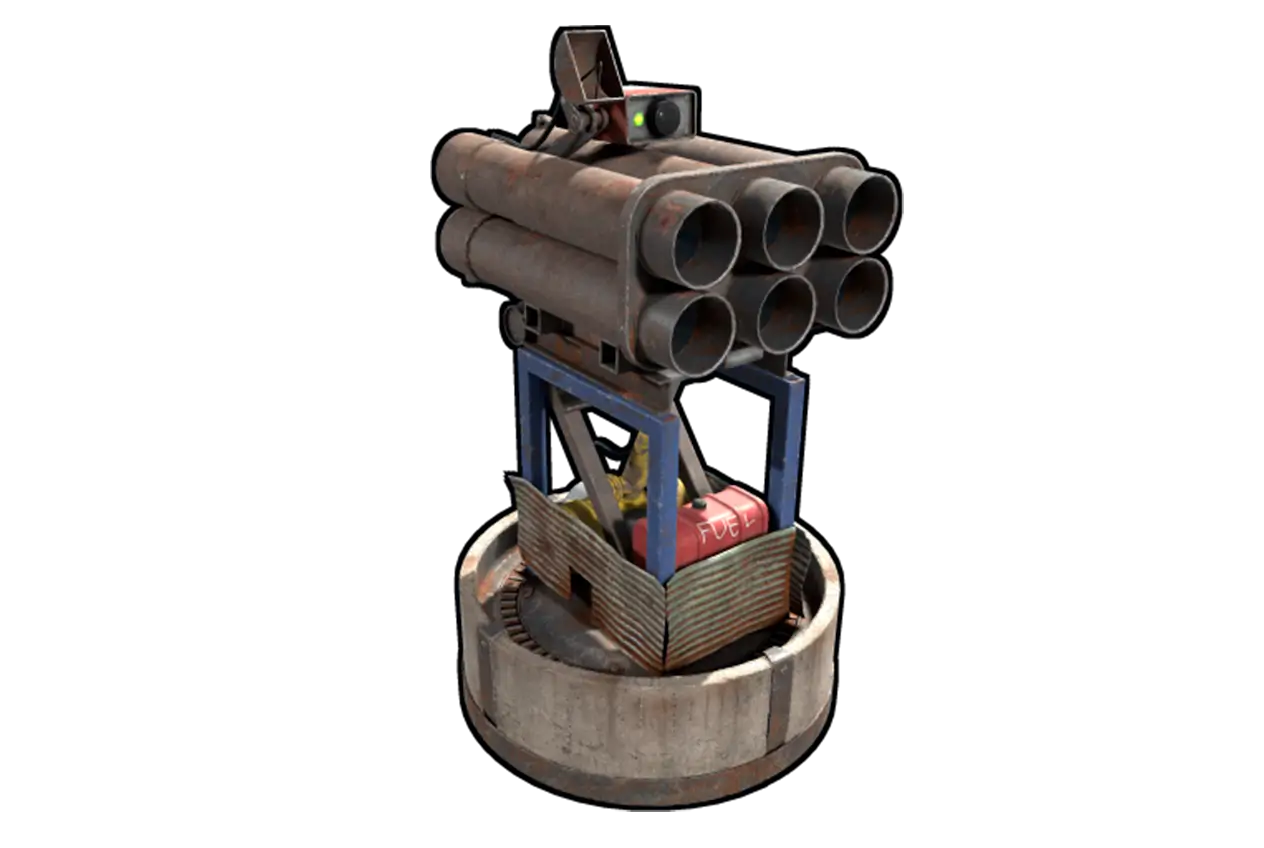
A SAM Site is an anti-aircraft installation and the core of base air defense. Its job is to automatically shoot down airborne threats. In the late-game context, SAM Sites solve several problems at once: protection against MLRS rockets, defense from aerial scouting, and prevention of rooftop access via minicopters.
Simply put, a SAM Site is the answer to the question “how do you protect yourself from missiles?”. If you have a large base, significant loot, and play on an active server, the absence of SAM Sites turns your base into a target for any clan that has accumulated MLRS rockets.
Installing and Placing SAM Sites on a Base
The biggest mistake players make is placing a SAM Site somewhere high and assuming they are now protected. SAM Sites only work when you consider coverage, visibility, and survivability.
First principle - the SAM Site must see the sky and have as few dead zones as possible. If it is placed in a pit, behind walls, under a roof, or near tall objects, some rockets will pass through before the SAM can react.
Second principle - separation. If multiple SAM Sites are placed too close together, a single successful explosion chain can destroy all of them. A well-designed base spreads SAM Sites across different corners so their coverage overlaps, but they do not die at the same time.
Third principle - electrical protection. Turret power is critical. A SAM Site without electricity does not function. If you rely on a single exposed generator, an attacker can disable your air defense faster than they spend rockets.
SAM Site Radius and Effectiveness
SAM Sites have a detection radius and a limited firing rate. They are not infinite. One SAM Site can shoot down targets, but if many rockets are incoming, a single installation is often not enough.
From a late-wipe perspective, defending against a full MLRS strike usually requires multiple SAM Sites. It is better to follow the rule “better too many than too few”, because one successful missile salvo can cost more than an extra installation ever will.
Coverage synergy also matters. SAM Sites protect not only from missiles but also from aerial scouting. If an enemy cannot safely approach by minicopter and inspect your roof, they are far more likely to make planning mistakes.
What Is HML (Homing Missile Launcher)
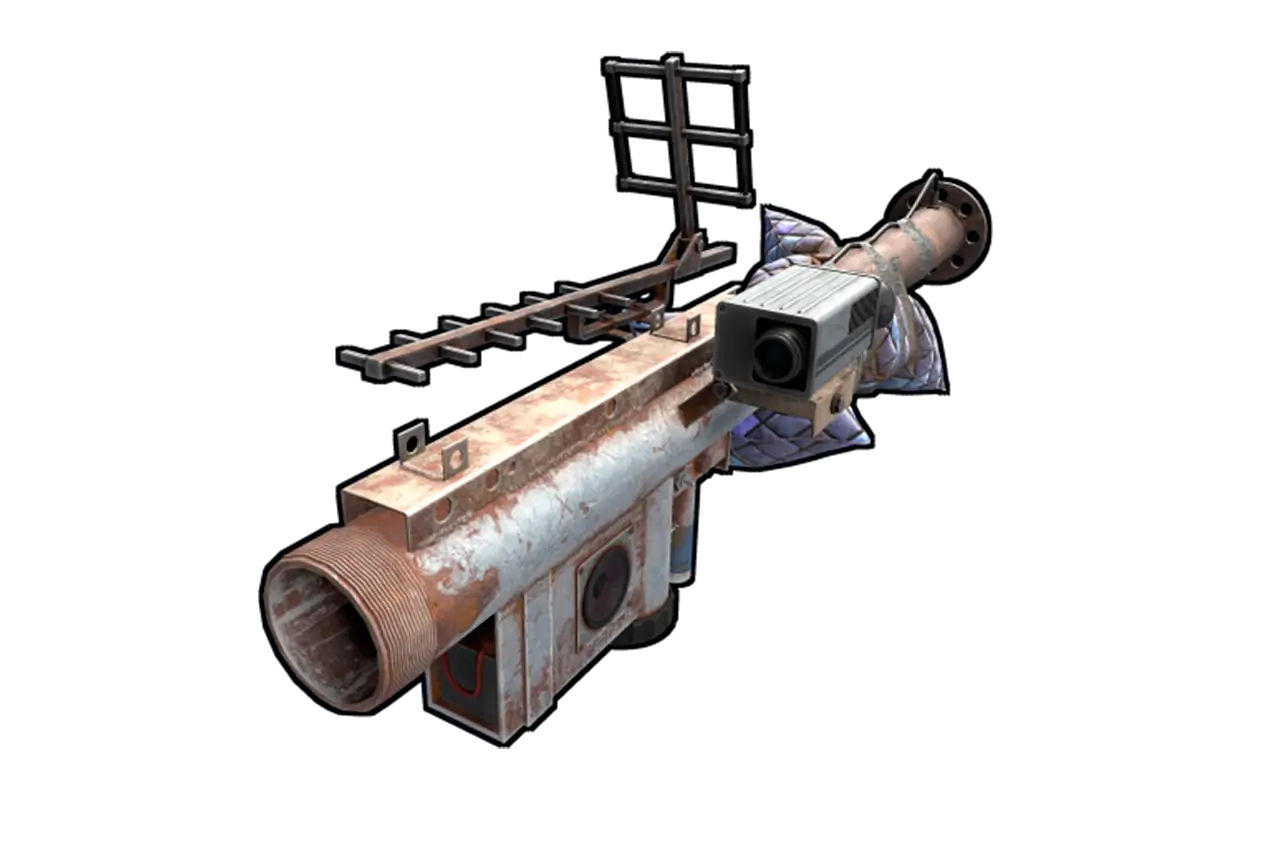
HML (Homing Missile Launcher) is a portable anti-air missile system. Unlike stationary SAM Sites, HML does not require installation or constant power. It is a mobile air-defense tool that a player carries and operates manually.
In real gameplay, HML is an air-control weapon. It is used to shoot down minicopters, punish aerial scouting, disrupt loot evacuation after raids, and protect rooftops during online engagements.
It is important to understand that HML is not used to raid walls or doors. It is about airspace, vehicles, and moment-to-moment dominance.
How to Use HML
HML requires direct line of sight. You aim, lock onto the target, and the missile tracks it. Ideally, you use HML proactively - not when the target is already escaping, but when you have positioning, angle, and the ability to fire again if needed.
The strongest use cases for HML are:
First - base defense during online raids. If enemies attempt to approach by minicopter, drop players onto the roof, transport loot, or perform fast aerial peeks, HML turns this into a serious risk.
Second - counter-raiding. Very often, loot is evacuated by air after a raid. One successful minicopter takedown can give you not only the vehicle but all the loot being transported.
Third - route control. If you live near strong RTs and minicopters constantly fly nearby, the presence of HML changes server behavior. Players start flying higher, more cautiously, or avoid your area entirely.
However, HML has an important limitation - its missiles can be intercepted by SAM Sites. Because of this, HML is not a replacement for SAM Sites but an additional layer of air defense.
Conclusion
MLRS, SAM Sites, and HML are not just late-game toys but real mechanics that define territorial control and the survival of large bases. MLRS allows you to apply area pressure and weaken defenses before a classic raid even begins. SAM Sites solve the problem of missile and air defense, while proper placement and power management make the difference between “we survived” and “we were wiped in a minute”. HML adds mobility and the ability to react to specific threats - from minicopters to loot evacuation attempts.
If you want to play confidently in the late wipe, these systems must not only be known but understood as a unified strategy. In Rust, the winner is not the one who presses the button first, but the one who prepares in advance, correctly evaluates the chance of success, and strikes when the enemy is most vulnerable.
Airspace secured - now it’s time to claim your bonus on CobaltLab!